Who Has Resigned After Revelations in the Epstein Files?
February 25, 2026
Ali Zafar wins defamation case against Meesha Shafi
March 31, 2026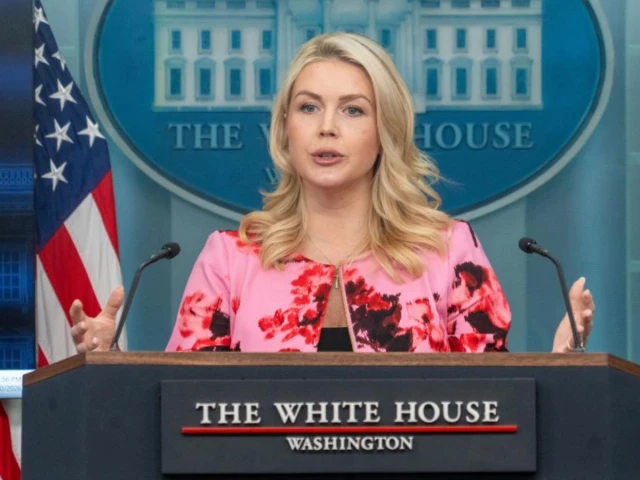
The United States may soon call on Arab countries to share the financial burden of its ongoing war against Iran, White House Press Secretary Karoline Leavitt indicated on Monday — a development with significant implications for regional dynamics, including Pakistan’s relationships with Gulf states.
Leavitt confirmed that funding the Iran conflict through Arab contributions is “something the president would be quite interested in calling them to do,” while also signalling that behind-the-scenes negotiations with Tehran are making quiet progress despite public hostility from the Iranian side.
A War Already Costing Billions
The financial scale of the conflict is staggering. Pentagon officials told the US Congress earlier this month that the Trump administration had already spent over $11.3 billion in just the first six days of military operations against Iran. That figure excludes battle damage assessments and equipment replacement costs, which independent analysts estimate could add a further $1.4 billion to $2.9 billion over the first three weeks alone.
With numbers like these, Washington’s interest in burden-sharing with wealthy Gulf states — particularly Saudi Arabia and the UAE — is hardly surprising. Trump has a well-established track record of pushing allies to pay for US military commitments, and the Iran war appears to be no different.
Secret Talks, Public Posturing
Despite Iran’s public rejection of US peace proposals as “unrealistic” — and continued missile strikes against Israel — Leavitt suggested the real diplomatic picture looks very different behind closed doors.
“What is said publicly is, of course, much different than what’s being communicated to us privately,” she said, adding that Iran had privately agreed to some of Washington’s positions.
Trump himself has struck a cautiously optimistic tone, telling reporters on Sunday that he considers “regime change” in Iran effectively underway, describing successive layers of Iranian leadership as having been “decimated” or “destroyed.” Secretary of State Marco Rubio was more measured, acknowledging that while new, more reasonable Iranian leadership would be welcome, the US must also prepare for the possibility that this may not materialise.
What This Means for the Region
For Pakistan, the trajectory of this conflict carries serious consequences. Any escalation affecting the Strait of Hormuz — which Trump threatened to “obliterate” Iran’s energy infrastructure over — would directly impact oil supplies and shipping costs critical to Pakistan’s import-dependent economy. Meanwhile, a US push for Arab states to fund the war effort could reshape Gulf foreign policy priorities and the financial support those states extend to countries like Pakistan.
The coming days will be decisive. Washington has made clear that Iran will be held to whatever is being agreed privately — and that failure to comply will bring further military consequences.